How MED-EL Cochlear Implants Provide the Closest to Natural Hearing
What Is Closest to Natural Hearing?
Natural hearing uses the entire cochlea.[ft] So providing the best chance to fully benefit from CI technology means finding a cochlear implant that uses most of the cochlea. When you provide your patients with an implant individualized to fit their ear, preserve natural structures during implantation, and perform fitting to match tones to their natural places, you can provide your patients with the closest to natural hearing.
The Full Spectrum of Sounds
When more of the cochlea is covered by the electrode, each tone can be stimulated at its natural place. Mid-to-low tones can be heard and sound more natural when stimulated in the apical region as nature intended.[ft][ft][ft][ft] The result can be a more natural overall hearing experience for your patients.
Exceptional Sound Quality
More precise tonotopic pitch matching means your patients can have a better subjective hearing experience—especially when it comes to sound quality and music perception.[ft][ft][ft] This also makes combining acoustic and electric stimulation easier.[ft][ft]
Superior Hearing Performance
Preserving hearing structures, stimulating more of the cochlea, and more accurate pitch matching can lead to measurable benefits in objective hearing outcomes. This is especially true with speech understanding in noise and sound localization.[ft][ft][ft]
Best Benefit Quickly
Stimulating each tone closer to its natural place in the cochlea means less adaptation for your patients. Noticeable improvements and objective hearing benefits can be common in the first months of device usage.[ft][ft][ft]
Stimulating the Entire Cochlea
Including apical hearing structures and FineHearing to stimulate as nature intended
- Long electrodes can stimulate apical hearing structures located 1.5-2 turns in the cochlea
- FineHearing technology uses place and rate coding for improved sound quality
Your patients can hear the mid-to-low frequencies with fuller, more natural sound quality.
The Right Pitch at the Right Place
Matching pitches more precisely with individualized cochlear implants and anatomy-based fitting
- Anatomy-based electrode selection that fits the unique anatomy of each individual cochlea
- Fine-tune the place-pitch match through anatomy-based fitting
More informed decision-making for each individual patient and closer tonotopic match can improve pitch perception.
Hearing and Structure Preservation
Soft electrode design and surgical factors such as slow, steady electrode insertion are important to minimize the risk of cochlear trauma, according to a growing body of studies.[ft][ft][ft][ft][ft][ft][ft][ft][ft][ft][ft][ft]
- Flexible electrode arrays that can be atraumatically placed in the cochlea
- Precision surgery tools for more consistent surgical outcomes compared to manual insertion[ft][ft][ft]
- Electrodes designed to preserve residual low-frequency hearing.
Your patients can experience better hearing performance, and the majority of patients can retain residual hearing.

Stimulating the Entire Cochlea as Nature Intended

“We stimulate the entire cochlea with the right signal.”
Ingeborg Hochmair, Founder and CEO of MED-EL
Complete Cochlear Coverage
Inspired by nature, MED-EL’s cochlear implants aim to unlock the full potential of each ear by stimulating nearly the entire cochlea—up to 1.5 to 2 turns—to leave none of the spiral ganglion unused.
In fact, only MED-EL’s FLEX electrodes can reach beyond 1.5 turns.[ft][ft][ft][ft][ft][ft][ft] This provides access to the entire hearing range, so your patients can hear the mid-to-low frequencies below ~800Hz more naturally. Not only does stimulating more of the cochlea allow recipients to benefit from accessing the full spectrum of sounds, it also contributes to better speech perception.[ft]

Apical Stimulation With FineHearing
MED-EL’s unique FineHearing technology replicates natural hearing to provide superior perception of low frequencies. Just as natural hearing works in the cochlea’s second turn, FineHearing stimulates in the right place and at the right rate. This allows your patients to experience fuller, more natural sound quality.[ft][ft][ft][ft]
Cochlear implants with short electrode arrays can’t stimulate the apical region. When an electrode array is too short for the patient’s cochlea, this can lead to pitch confusion. As a result, a deep male voice may sound like Mickey Mouse—much higher than it should sound.[ft][ft]

The Right Pitch at the Right Place
Reducing pitch mismatch can improve hearing outcomes in the first weeks and months, helping your patients to adapt quicker to their cochlear implant.[ft][ft][ft] Patients with less tonotopic mismatch also tend to benefit more across the lifespan of cochlear implant usage when compared to peers with more mismatch.[ft] More precise pitch matching requires the right tools.
The Right Electrode for Each Cochlea Promotes Pitch Matching
Anatomy-based electrode selection, when an electrode array is selected based on the individual size of a cochlea, can provide pitch match closest to that cochlea’s specific natural tonotopic place-pitch map.[ft][ft][ft] That is why MED-EL offers the largest portfolio of soft, flexible arrays so surgeons can choose the ideal array for each ear. Standard preoperative imaging and OTOPLAN’s electrode visualization feature can help surgeons visualize how each electrode array would fit each patient’s unique cochlea.

Closest to Natural Pitch Perception With Patient-Specific Data
Even though our default frequency map is designed to follow the natural tonotopic map of the cochlea, not every electrode array ends up at the exact same location. Anatomy-based fitting lets you instantly calculate center frequencies based on the real post-op electrode location for individualized fitting of the frequency bands. When each electrode contact is correctly “fine-tuned” to the center frequency for its real pitch-place, you can provide your patients with more precise pitch matching.[ft][ft][ft][ft] This helps support the closest to natural pitch perception.

Hearing and Structure Preservation
Patients with residual hearing often fear losing what they still can hear without a device. We’ve listened to them and focused decades of deliberate research and development on hearing and structure preservation, keeping it at the heart of our FLEX electrode array design. The result? MED-EL is the only company with FDA-confirmed evidence showing that its FLEX electrodes preserve residual hearing in the majority of recipients.*
In addition to soft, flexible electrodes, we also provide precision surgery tools. Why? Because, along with electrode design, surgical factors such slow, steady electrode insertion are important to minimize the risk of cochlear trauma, according to a growing body of studies.[ft][ft][ft][ft][ft][ft][ft][ft][ft][ft][ft][ft]
Adapted from Van de Heyning et al., 2022.[ft] For inclusion, insertion depths of at least 20 mm were reached with FLEX24 electrodes and over 28 mm with FLEXSOFT and FLEX28 electrodes in EAS patients. (N=300)
Soft, Flexible Electrode Arrays
Our flexible electrode arrays help preserve delicate cochlear structures, enabling atraumatic scala tympani placement and hearing preservation.[ft][ft][ft][ft][ft][ft][ft] In fact, data from a systematic review demonstrate complete or partial residual hearing preservation in over 85% of MED-EL EAS recipients with FLEX electrodes at 12 months after implantation.[ft]
Our FLEX electrodes offer the ideal mix of mechanical flexibility and channel spacing. The flexibility gained by adding more space between contacts means the electrode arrays can be inserted deeper into the cochlea with reduced insertion force. More spacing also helps to avoid crosstalk from overlapping stimulation channels.[ft][ft][ft]
Precision Cochlear Implantation
As the leading global innovator of hearing implants, we understand the need for precision tools to help you in the OR. That’s why we provide tools like OTODRIVE and OTOARM to enable slow, steady, and precise electrode array movement during implantation.**
These precision surgical tools were specifically designed to ensure that the electrode array is slowly placed within the cochlea. This approach can reduce the risk of trauma and help achieve more consistent surgical outcomes compared to manual insertion.[ft][ft][ft][ft][ft]
The World Leader in Hearing Preservation
Residual hearing preservation has been associated with better hearing performance in cochlear implant recipients. This includes enhanced speech perception in noise and music perception, as well as advantages in early auditory and speech development for pediatric patients.[ft][ft]
MED-EL is the only company with FDA-confirmed evidence from routine clinical practice showing that its FLEX electrodes preserve residual hearing in the majority of recipients.* This means the best opportunity to preserve a patient’s residual hearing—and provide the benefits of hearing with a cochlear implant—is with MED-EL’s FLEX electrode design.[ft][ft][ft][ft][ft]

Why MED-EL:
A Trusted Partner
For more than 35 years, MED-EL has been a trusted partner and innovation leader in hearing implants. We’re here to work together with you, and we’re committed to providing outstanding service and support for our professional partners.
With the most advanced cochlear implant systems, we offer the best hearing experience for your patients and the best clinical experience for you.
Contact Us
Ready to learn more about MED-EL cochlear implants?
Fill out our simple contact form and we’ll get in touch with you.

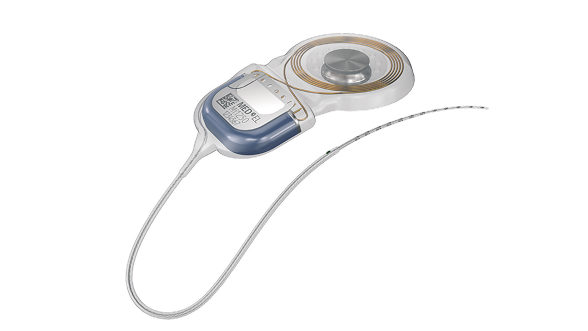
SYNCHRONY 2
See why individualized electrode arrays, safe access to MRI, and a streamlined central electrode lead for exceptional surgical handling make SYNCHRONY 2 your new favorite cochlear implant.
Discover More
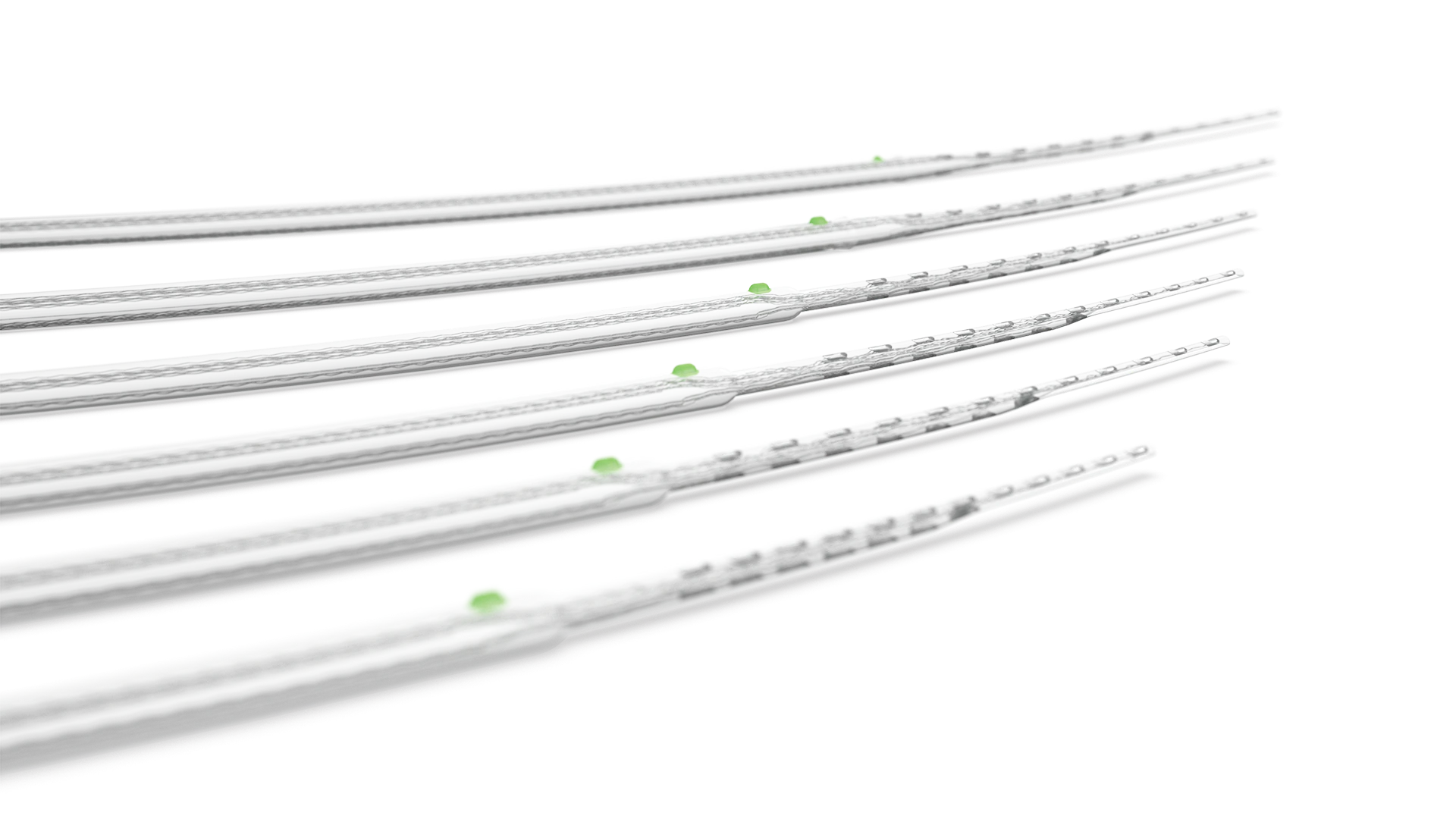
Electrodes
Find out what sets MED-EL electrode arrays apart from any other design to enable a closer to natural sound quality that no other cochlear implant can match.
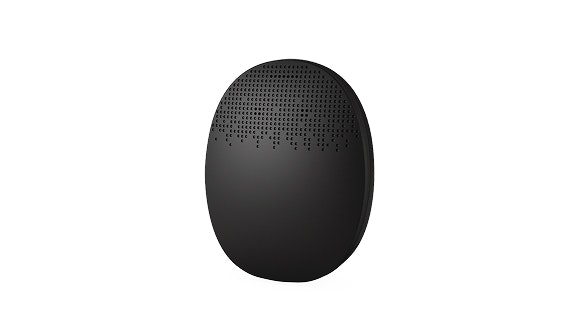
RONDO 3
Find out how wireless charging, directional microphones, and wireless connectivity make RONDO 3 incredibly simple and simply incredible.
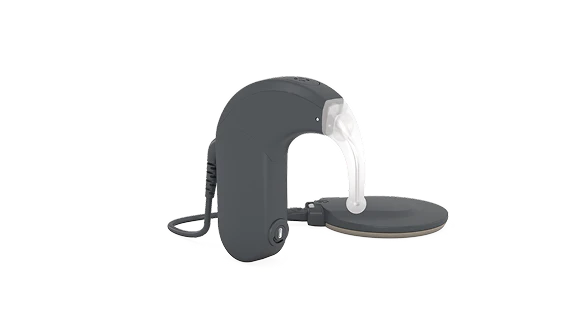
SONNET 3
Our smallest and lightest SONNET audio processor ever, SONNET 3 is waterproof and provides users closest to natural hearing, maximum wearing comfort, and direct streaming.
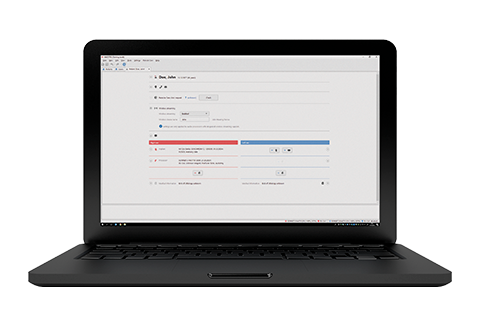
MAESTRO 11
With enhanced features and SONNET 3 support, MAESTRO 11 makes providing in-clinic and remote care to your patients with cochlear implants easy.
* In 57.4% of recipients with a FLEX electrode array, some degree of residual hearing was preserved over a period of 12-24 months. Complete preservation of residual hearing was achieved in more than a quarter of recipients during this period. This approval was based on data from a registry (real-world data) rather than from controlled research studies. For details, see the US Food & Drug Administration (FDA) document "Summary of Safety and Effectiveness Data" from the Premarket Approval Application (PMA) number: P000025/S129, MED-EL Cochlear Implant System, https://www.accessdata.fda.gov/cdrh_docs/pdf/P000025S129B.pdf.
** CASCINATION AG is the legal manufacturer of OTODRIVE. MED-EL is the exclusive distributor of OTODRIVE. For compatible devices, refer to the relevant instructions for use. All devices are sold separately.


