360° View of Cochlear
Implant Safety and Reliability
Our Philosophy
Hearing connects us to so many of life’s cherished moments. That’s why we’re always here to help your patients with hearing loss experience these wonderful moments day after day.
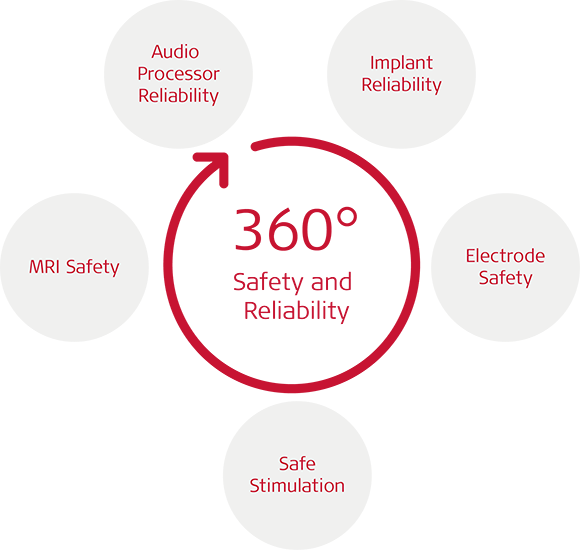
Since the very beginning, the development of our life-changing devices has been guided by our unique 360-degree view of reliability and safety. It’s not only about making our cochlear implants and audio processors as reliable as possible. Electrode design, safe stimulation and MRI safety are also integral aspects of cochlear implant safety. Without taking these into account, creating a safe and reliable hearing experience just isn’t possible.
Every MED-EL recipient is a person who trusts us. We know they count on us to connect them to everything they love every day, and we are committed to providing them with devices that meet the highest quality, safety, and reliability standards on the market.

The World Leader in Cochlear Implant Reliability
All of our cochlear implants introduced since 2006 have an overall cumulative survival rate over 99%—reliability performance that no other cochlear implant manufacturer has achieved.[ft][ft][ft]
The outstanding reliability of our cochlear implants is not by chance. It is the result of the focused oversight and expert craftsmanship that takes place in our state-of-the-art manufacturing facilities. Unlike other cochlear implant producers who outsource manufacturing overseas, every single MED-EL implant is produced at our global headquarters in Austria—and it has been that way for over 35 years. This allows us to consistently maintain the highest standards of European quality and engineering.
We take every detail into consideration, from quality-oriented design and development to vigorous testing and clinical support. With our cutting-edge processes, superior components, and exceptional quality control, it is no coincidence that every MED-EL cochlear implant meets the highest standards for quality, safety, and reliability. But don’t take our word for it—the data speaks for itself.
- 360° comprehensive approach to safety & reliability
- All implants manufactured in Austria
- Unmatched backwards compatibility
Reliability In-Depth
Our Reliability Report gives a complete overview of our latest cochlear implant reliability data.
Download Cochlear Implant Reliability ReportWhat Makes MED-EL’s Hearing Implants So Reliable?
Listen to our podcast series to discover how we ensure that every MED-EL hearing implant meets the highest standards for quality, safety, and reliability.
Electrode Safety: First, Do No Harm
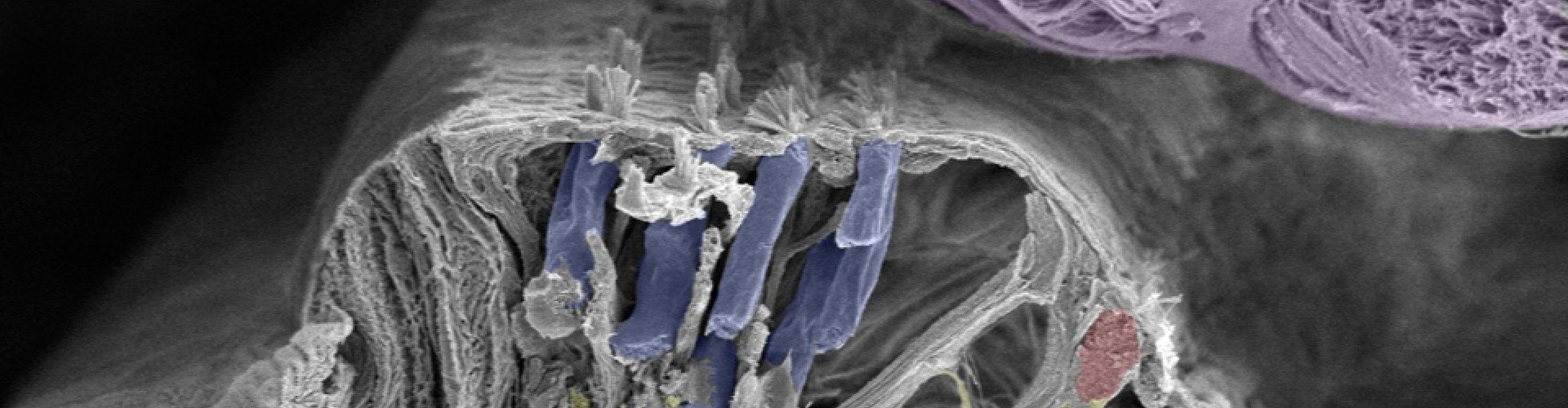
A deaf ear is not a dead ear, and the cochlea is filled with intricate structures that we want to protect. That’s why, for more than 35 years, we’ve worked to create our ultra-flexible electrode arrays.
Uniquely engineered, MED-EL’s FLEX electrodes are designed to support the preservation of the delicate structures of the inner ear and gently adapt to the individual cochlea during electrode insertion.
- The best opportunity for hearing preservation
- The lowest incidence of scalar deviation
- The lowest incidence of tip fold-over
The Lowest Incidence of Scalar Deviation
To preserve the delicate structures of the cochlea, the electrode array must be placed fully in the scala tympani. If the electrode deviates into the scala vestibuli, it allows the endolymph and perilymph fluids to mix. This could impair essential nerve function and destroy any residual hearing. This may also permanently negatively affect a recipient’s hearing performance and leave them unable to benefit from new technologies such as improved coding strategies.[ft][ft][ft][ft]
The scala tympani is separated from the scala vestibuli by incredibly delicate structures that measure only a few microns in diameter. Data from systematic literature reviews demonstrate that stiff, pre-shaped arrays are far more likely to penetrate the basilar membrane and cross into the scala vestibuli. Scalar deviation is also more likely with stiff straight arrays. MED-EL FLEX electrode arrays had the lowest overall rate of scalar translocation in comparison to those from Cochlear and Advanced Bionics.[ft][ft][ft]
The Lowest Incidence of Tip Fold-Over
With pre-curved electrode arrays, the tip of the electrode array can also become lodged and fold over upon itself. This tip fold-over complication can seriously compromise the interface between the electrode contacts and the cochlea, and often limits coverage to less than three-fourths of a single turn in the cochlea. [ft][ft][ft][ft][ft][ft]
With MED-EL FLEX electrodes, tip fold-over is rare. Our unique, rounded electrode design with FLEX-Tip Technology helps our electrode arrays to gently adapt to the anatomy of each individual cochlea, so there is a very minimized risk of the tip becoming lodged or folding over.
Data from a systematic literature review of 46 studies (N=8163 ears) demonstrate that MED-EL has the lowest reported rate of tip fold-over at 0.14%, compared to Advanced Bionics at 0.63%, and Cochlear with 3.47%.
Results of a meta-analysis of 46 peer-viewed publications (N = 8,163 ears). See references at end of the full report.
Even the Smallest Cochleae Can Accommodate a FLEX Electrode
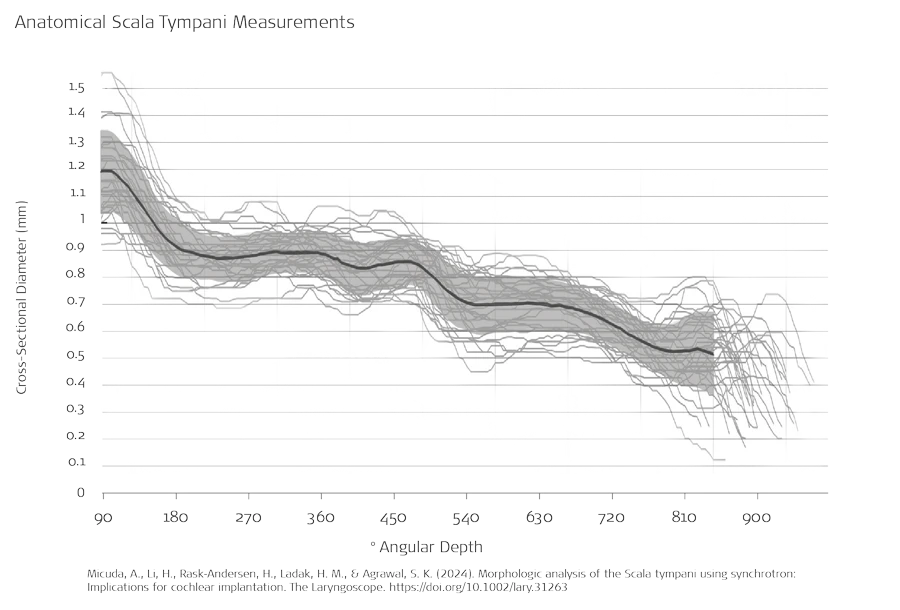
As the cochlea nears the apex, the cross section of the scala tympani tapers in diameter to approximately 0.7 mm at 720°. This is why it is important to ensure the array can safely fit in the cochlear duct. However, with other thin arrays, the electrode array only covers the basal turn where a reduced diameter is not necessary.
Our lateral wall FLEX arrays use a tapered FLEX-Tip for the five apical electrode contacts, making FLEX series the thinnest full-length electrode arrays available. With a tip diameter of 0.4 x 0.5 mm or less, the FLEX-Tip can be safely and reliably placed in the second turn of the scala tympani without harming the basilar membrane.[ft] In other words, the FLEX-Tip is designed to be like tiny toes easily fitting into the narrow end of a shoe.
“This study represents a wide variability in cochlear morphology and suggests that even in the smallest cochlea, the scala tympani can accommodate a 0.4 mm diameter electrode up to 720°. Additionally, all lateral wall array trajectories were within the anatomically accommodating insertion zone.”
Micuda et al., 2024[ft]
Safe Stimulation
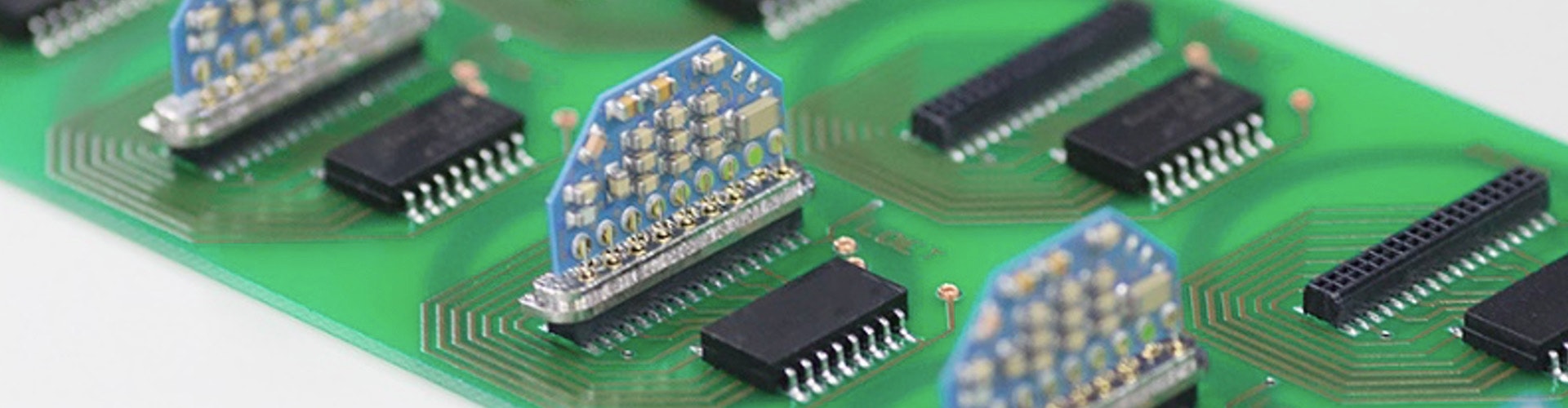
When it comes to the long-term safety of cochlear implants, safe stimulation is an absolute must. If direct current reaches the cochlea, it could result in the dissolution of electrode contacts or even damage to neural tissue.[ft][ft][ft][ft][ft][ft][ft] That’s where safety capacitors come in. They work as a gatekeeper, letting alternative current flow back and forth, while blocking harmful direct current and ensuring safe stimulation.
Independent Safety Capacitors
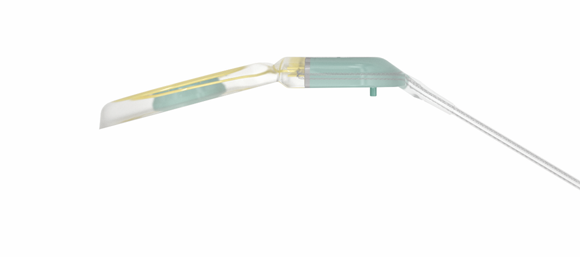
Unlike some cochlear implant manufacturers, MED-EL has an independent safety capacitor for every electrode channel. That way, we can ensure safe, precise, and fast stimulation in the long term.[ft][ft]

Made for MRI
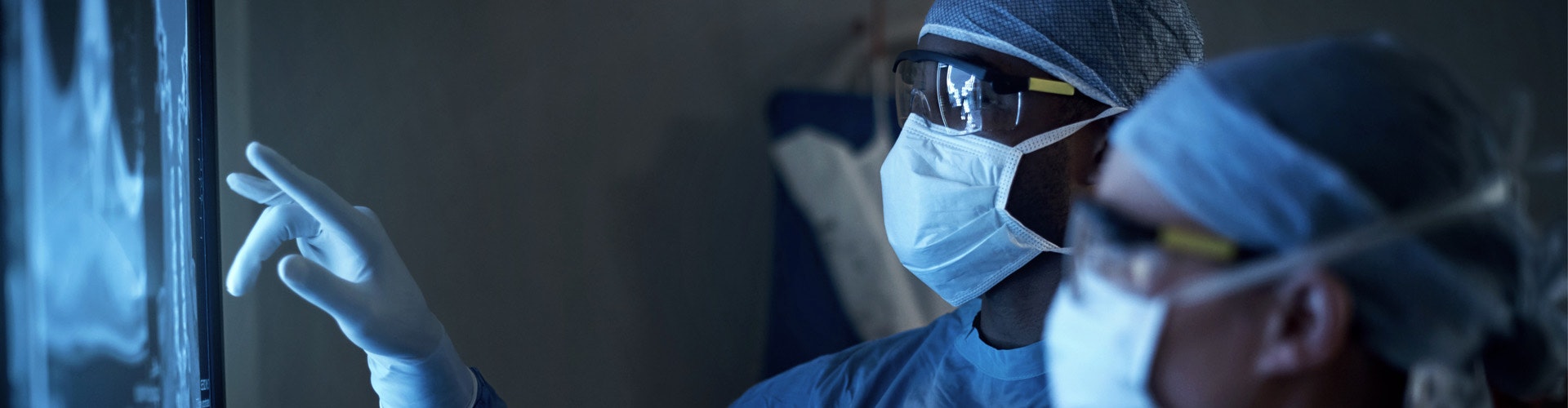
Creating a reliable cochlear implant means creating one that’s ready for the future. With most of your patients needing an MRI in the next 10 years, we believe that every single hearing implant should be designed for outstanding MRI safety.** That’s why we created the revolutionary SYNCHRONY implant magnet—a rotatable, self-aligning magnet that enables 3.0 Tesla MRI scans*** with no surgery,**** and no hearing downtime.
Great Protection. Guaranteed.
Because of our long and positive experience with MRIs and cochlear implants, we offer a life-long MRI guarantee. In the very unlikely event that it’s damaged during an MRI scan we will replace the implant.† Our MRI guarantee is:
- Valid for all MED-EL multichannel cochlear implants since 1994.
- Life-long and worldwide.
- The first and only offered by any hearing implant producer.
With no need to remove the magnet, and a guarantee against damage during an MRI we can offer your patients a reliable cochlear implant experience whatever life brings.

Audio Processor Reliability
It’s not just our implants that are designed to deliver outstanding reliability, but our audio processors too. With a reliable audio processor, your patients save themselves time, money, and hassle. And it’s less trouble for hearing professionals: With fewer issues, you’ll save time on fitting replacements and administrating returns.
Reliable Hearing for Everyday Activities
Our latest generation audio processors have a proven record of outstanding reliability. In fact, the average monthly repair rate of all our audio processors is low.[ft]
If an audio processor has an average monthly repair rate of 1.32%, it means that, on average, 132 audio processors have been returned for repair each month out of 10,000 total audio processors sold in the world by the end of the period covered.
SONNET 3 has one of the best repair rates of the audio processors on the market, with a low average monthly repair rate of 0.16% within the last 24 months.[ft][ft][ft]
“A sturdy, waterproof technical wonder—without connectivity problems—that enables the best possible hearing experience.”
Mariella S.
SONNET 3 User

Audio Processor Retention
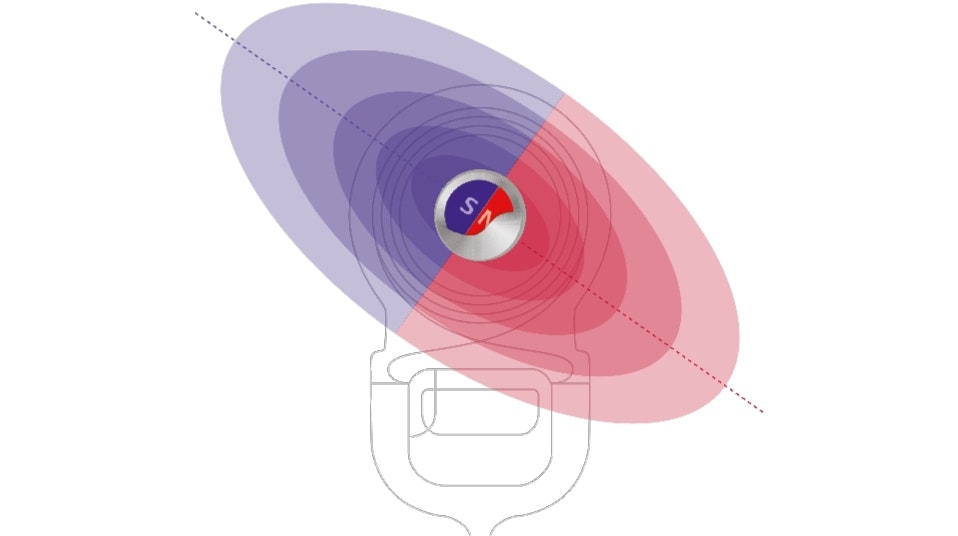
Audio processor retention is an important and often overlooked reliability issue. MED-EL audio processors are optimized to stay securely in place thanks to our unique S-Vector magnet technology. With 25% greater magnet pull strength, recipients can trust that their audio processors won’t fall off—even off-the-ear audio processors such as RONDO 3.

MED-EL:
A Reliable Partner
For more than 35 years, MED-EL has been a trusted partner and innovation leader in hearing implants. We create and manufacture our implants directly in our Austrian headquarters, ensuring they follow state-of-the-art European engineering, and meet the highest standards in quality and reliability. With this focused oversight and our dedication to quality, we can check and verify every single step of the design and manufacturing process.
MED-EL has always been privately owned by our founders, so for us reliability is not a percentage or an earnings report for investors. With no external shareholders to answer to, we’re in a unique position where we can put the safety and peace of mind of our recipients above all else. And because we believe that everyone should benefit from the latest hearing technology, our latest audio processors work for all our recipients since 1994.
Choosing MED-EL means putting your trust in us. We promise to always be there for you.
- European engineering
- Manufactured on-site
- Dedication to reliability and quality
- Unmatched backwards compatibility
- Committed to recipients
Contact Us
Want to learn more about MED-EL and our life-changing hearing solutions? Simply fill in the form below.
* All registered and currently marketed implants are included in the reliability calculations, and every explanted and returned implant is subject to systematic failure analysis. All failures are classified and Cumulative Survival Rates (CSR) are calculated
in accordance with ISO 5841-2:2014. All confirmed device malfunctions including accident-related failures are considered for reporting. Failures traced back to induced malfunctions are not included in the reported data in compliance with the ISO standard.
The results of the calculations are reported following principles of the European Consensus on Cochlear Implant Failures and Explantations, with adults and children being shown separately and with 95% confidence intervals. Please be aware that confidence
intervals smaller than 0.1% may not be clearly visible in the graphs.
The sample size of each model and population are not provided. MED-EL publishes reliability data one year after the first implantation at the earliest.
** In 57.4% of recipients with a FLEX electrode array, some degree of residual hearing was preserved over a period of 12-24 months. Complete preservation of residual hearing was achieved in more than a quarter of recipients during this period. This approval was based on data from a registry (real-world data) rather than from controlled research studies.
For details, see the US Food & Drug Administration (FDA) document „Summary of Safety and Effectiveness Data“ from the Premarket Approval Application (PMA) number: P000025/S129, MED-EL Cochlear Implant System, https://www.accessdata.fda.gov/cdrh_docs/pdf/P000025S129B.pdf.
*** MED-EL
cochlear implants since 1994 are MR conditional. Recipients with a MED-EL cochlear implant may be safely MRI scanned following the conditions detailed in the instructions for use.
**** Unless required for diagnostic reasons.
† The terms
and conditions of the MRI Guarantee can be found here.


